Why Are Cultural Assets Valuable?
Brixton's Culture Capital — Full Circle
I’ve lived in Brixton my whole adult life. I work here, I eat here, I shop here. I do everything in Brixton, and for the last three weeks I’ve watched our community decide to buy Brixton Village ourselves – at a price brought down to £50 million.
And my heart has soared. Because Brixton has built an electric culture. And for too long, people have been trying to claim it for a profit.
Everyone wants a piece of Brixton. Faceless private investors have been booting prices into the stratosphere to line their pockets. The people who worked, lived and loved to make these streets an “investment” are quickly being edged out.
People keep asking me the same question. So let me answer it plainly: Why are cultural assets valuable?
Because the culture is the whole reason people come
Ultimately, it all comes down to three questions: who protects it, who builds it, and who exploits it?
Investors and private equity firms have always measured places like Brixton Village the way a spreadsheet would – square footage, footfall, rent per unit. But that number is the result of the culture, not the cause of it. And it never captures what actually pulls people through the tube and onto the street.
That’s the thing we feel in our bones.
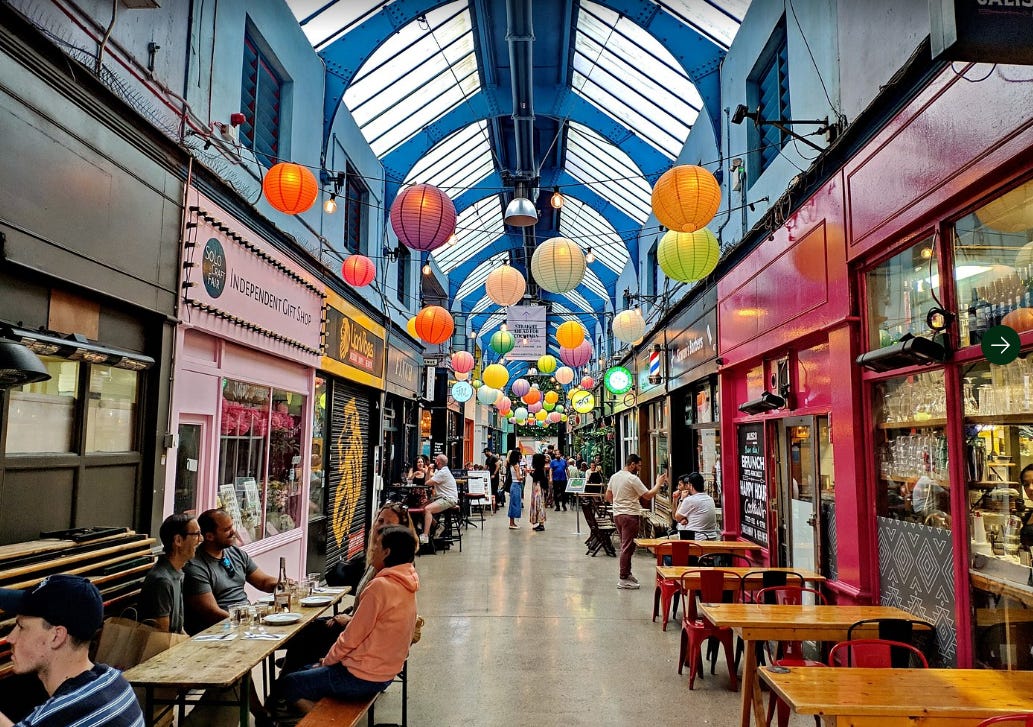
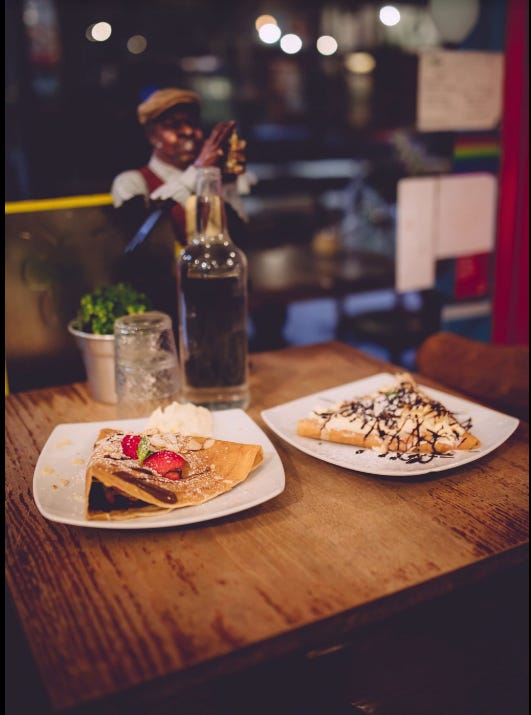
The vibrant Caribbean and Latin American community and their food. The fish stalls and the butchers on one side of the alley. The restaurants on the other turning those ingredients into delicious plates that hold their own against any Michelin-starred kitchen in the city. The Portuguese café that’s been here longer than most of the chains on Oxford street. The fact that you can walk in a stranger and leave knowing three people’s names – that’s why you come back.
It’s the feeling that hits you the moment you arrive – like you’ve stepped off the tube and onto holiday, with the colours and flavours from every corner of the world in the space of a single alley.
That’s because Brixton is a genuine melting pot – Caribbean, African, Portuguese, Latin American, South Asian, and every generation that’s passed through – layered on decades of history that made Brixton Brixton. I’ll say it boldly: I think it’s the most diverse place on earth, and I’m still waiting to be proved wrong. The market alone has over 100 languages spoken within it – real communities from every corner of the earth, not a tourist’s idea of them. That’s diversity you can taste and hear and see, and it exists nowhere else. You cannot copy it, franchise it, or rebuild it somewhere else with cheaper or more expensive rent. It is really, truly unique.
And that’s what brings the tourists. That’s what drives the footfall. That’s what makes people cross London – and the world – to spend an afternoon here.
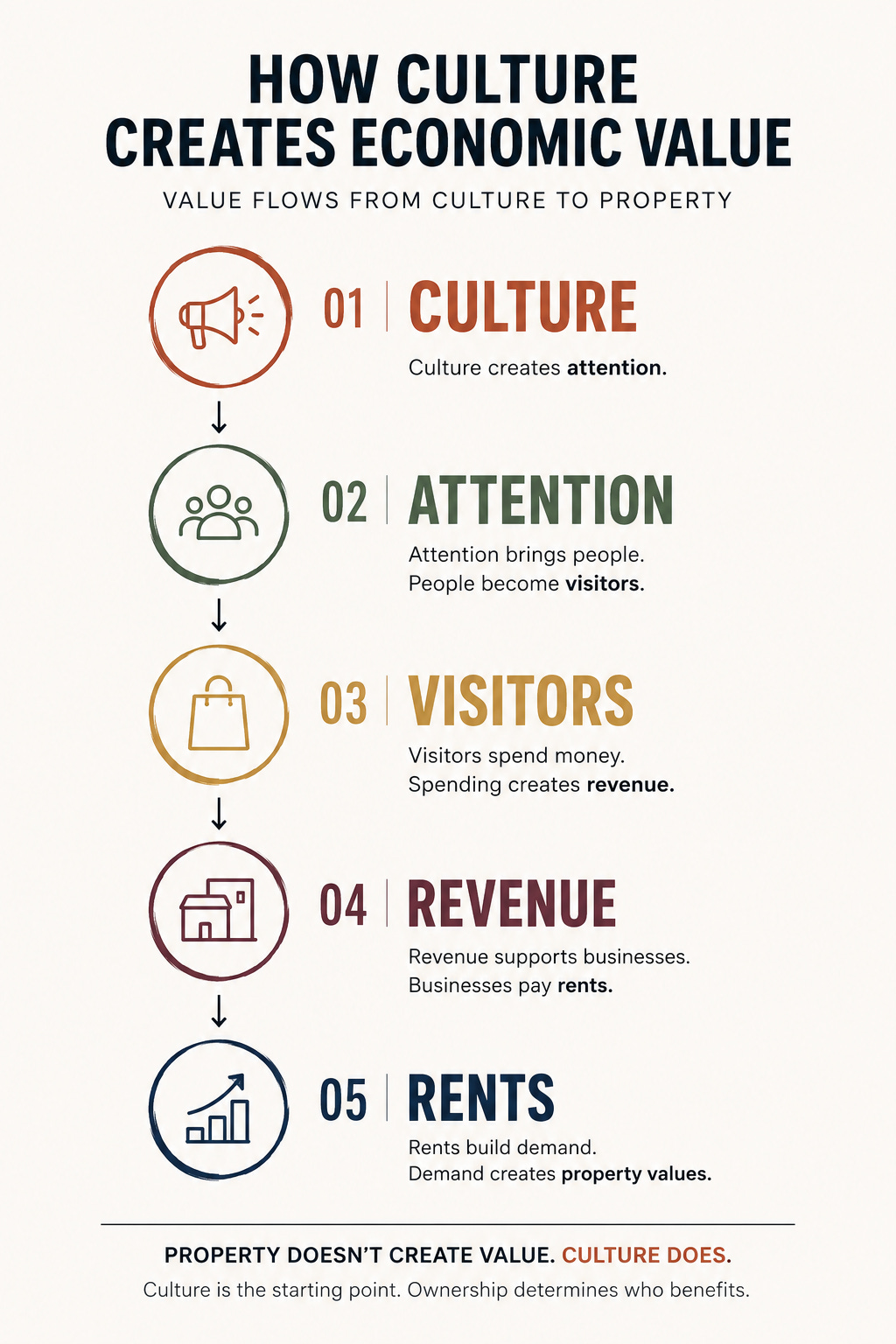
This is what economists call cultural capital: the identity, memory, diversity and belonging that a place builds up over time. And that’s the sticking point. “Capital.” It’s a noun that refers to financial wealth, money, or assets used to produce goods or generate income.
We felt the tension long before we saw the suits. You don’t need one to know extraction is happening – you can smell it. When the planning applications start rolling in, when the cranes go up and the glass starts coming through, when another chain moves in, we know the money is leaving. The daytime traders give way to the night-time trade, and the price of everything starts to climb.
We’ve long known that the culture is the value. And that value is exactly what we’re trying to protect and elevate – not sell to the highest bidder.
Because you can feel the difference
Ask yourself a simple question: why is a unit in Brixton worth more than the same unit in Oval, one stop up the line? It’s not the bricks. It’s the market. It’s the traders. It’s the different foods and drinks, the events every night, the energy that hits you the moment you walk out of the station – energy that pulses and thrives despite everything Brixton has been through.
People stop to photograph the fruit stalls. They stand close to real, unpackaged food and feel something a supermarket can never give them. This place reminds us who we are. It hands back the humanity that so much of modern life has stripped away.
Because underneath all the economics, that’s what we’re really talking about. Everybody is lonely. We are all looking for people, for connection, for a bit of soul. A market like Brixton Village gives you that in a way a rent roll can’t measure. And today, that matters more than profit. That is the value we are fighting to protect.
Because culture turns into capital – and someone always cashes in
Here’s what I worked out back in 2022. Culture starts as something intrinsic – our music, our food, our language, our way of being, made authentically by the people who live it.
But the moment the world starts imitating it, wanting a taste of it, associating itself with it, that culture becomes extrinsic. It becomes capital – something you can borrow, brand and sell.
More than fifty businesses now trade on the word “Brixton”, many with no real connection to the people or history that made the name mean something. The community created the value; the community rarely sees the uplift.
I laid the whole argument out at the time – intrinsic versus extrinsic value, contribution versus exploitation, and an early idea for a “culture tax” – in Brixton’s Culture Capital. It’s worth reading in full, because it leads straight to where we are now.
A culture tax only ever asked those who profit from our culture to give a little back. Ownership means we stop giving it away in the first place. For twenty years, regeneration raised Brixton’s value and handed most of it to whoever owned the buildings. We built the capital; others captured it.
Owning Brixton Village is how that finally changes – the value we generate stops leaking out to whoever holds the freehold, and starts flowing back to the people who built it.
Because that value keeps growing – if you protect it
Cultural assets appreciate. As high streets everywhere start to look identical, the places with real character become rarer and more valuable.
The usual model of ownership erodes the very thing that makes these places worth so much. Every time a local trader is priced out for whoever pays the most rent, the asset gets richer on paper and poorer in every way that made it matter.
Protect the culture and the value compounds. Strip it out and you kill the golden goose. That’s why community ownership of Brixton Village matters.
Because ownership changes every decision
When you rent, you protect the landlord’s asset. When you own, you protect your own. The moment a community holds the freehold, you stop chasing maximum rent this quarter and start growing the value of something you’ll hold for a generation.
And those goals aren’t in tension. A trader who won’t be priced out invests in their stall. An owner who lives here cares about the mix of shops, not just the yield. The character that draws people in gets protected instead of sold off – and because the community owns the asset, the value flows back to us instead of out.
Because it creates real public equity
This is the heart of it. When we own Brixton Village together, the uplift in its value belongs to the people who created that value in the first place – the traders, the residents, the community that made it worth visiting. Not equity in the abstract stock-market sense. Equity as in a real stake. For once, the people who generate the cultural capital are the people who get to own it.
Because a country that owns its culture is a stronger one
Every town has a market, a venue, a pub, a building that means something. Most are quietly for sale to the highest bidder, and most will end up owned by someone who’s never set foot in the place. We treat them as private assets when they’re really public ones – held privately, valued collectively.
Now imagine the alternative: a country where cultural and community assets are owned by the communities that depend on them, where the value they generate stays local and gets reinvested locally. That’s not nostalgia. It’s smarter economics. It builds resilience, keeps wealth circulating in places that have watched it drain away, and turns the thing we love about a place into durable, community-held equity.
That’s why we’re buying back Brixton
The funders backing us aren’t investing out of charity. They see that cultural assets are appreciating, that community ownership protects what makes them appreciate, and that there’s a whole category of value the old model could never capture.
Brixton Village is where we prove it works. If we can do it here, it can be done everywhere.
In 2022, I asked who protects our culture, who builds it, and who exploits it. We finally have our answer: we do. We protect it, we build it, and we own it.
We’re buying back Brixton – and we’re just getting started