

Why Are Cultural Assets Valuable?
Brixton's Culture Capital — Full Circle
I’ve spent my adult life living and building businesses in Brixton.
Over the last few weeks, our community has attempted something extraordinary: buying back Brixton Village.
People keep asking me the same question:
Why is Brixton Village so valuable?
The answer isn’t the buildings.
It’s the culture.
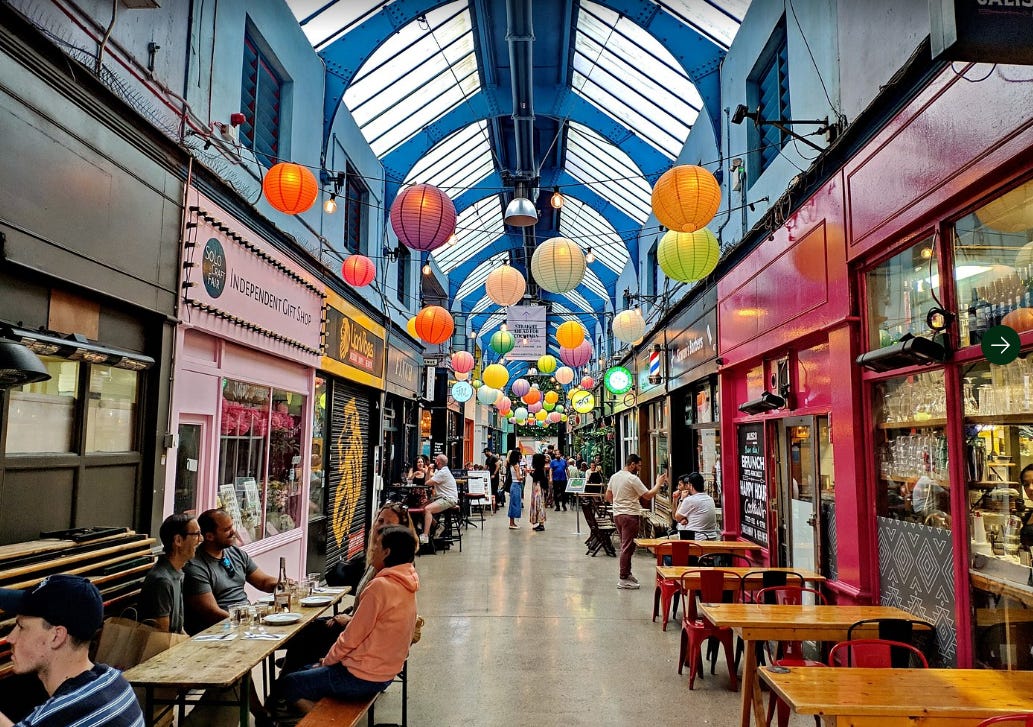
That might sound sentimental.
It isn’t.
Investors value Brixton by looking at footfall, rents and property prices. But those are all consequences. They measure the value culture creates—they don't explain where that value comes from.
Culture is the reason people travel across London, and across the world, to spend a Saturday in Brixton.
It’s why restaurants can charge more here than elsewhere. It’s why businesses want Brixton in their name. It’s why property around the market commands a premium.
Culture isn't decoration. It's productive.
Culture creates value
Walk through Brixton Village on any Saturday and you'll see the real asset.
Fishmongers and butchers on one side of the arcade. Restaurants on the other transforming those same ingredients into food that rivals some of London’s best kitchens.
Portuguese cafés that have outlived countless trends.
Caribbean, African, Latin American and South Asian communities layered together over generations.
More than one hundred languages spoken within a single market.
You can build another shopping arcade.
You cannot build that.
You cannot franchise it.
You cannot recreate it by simply spending more money somewhere else.
Places like Brixton aren't designed. They emerge over generations.
Decades of migration, entrepreneurship, music, food, struggle and celebration create something no developer can manufacture.
That’s what people come for.
I think we should take the phrase “cultural capital” more literally.
Culture doesn't create value directly. It creates a chain reaction.
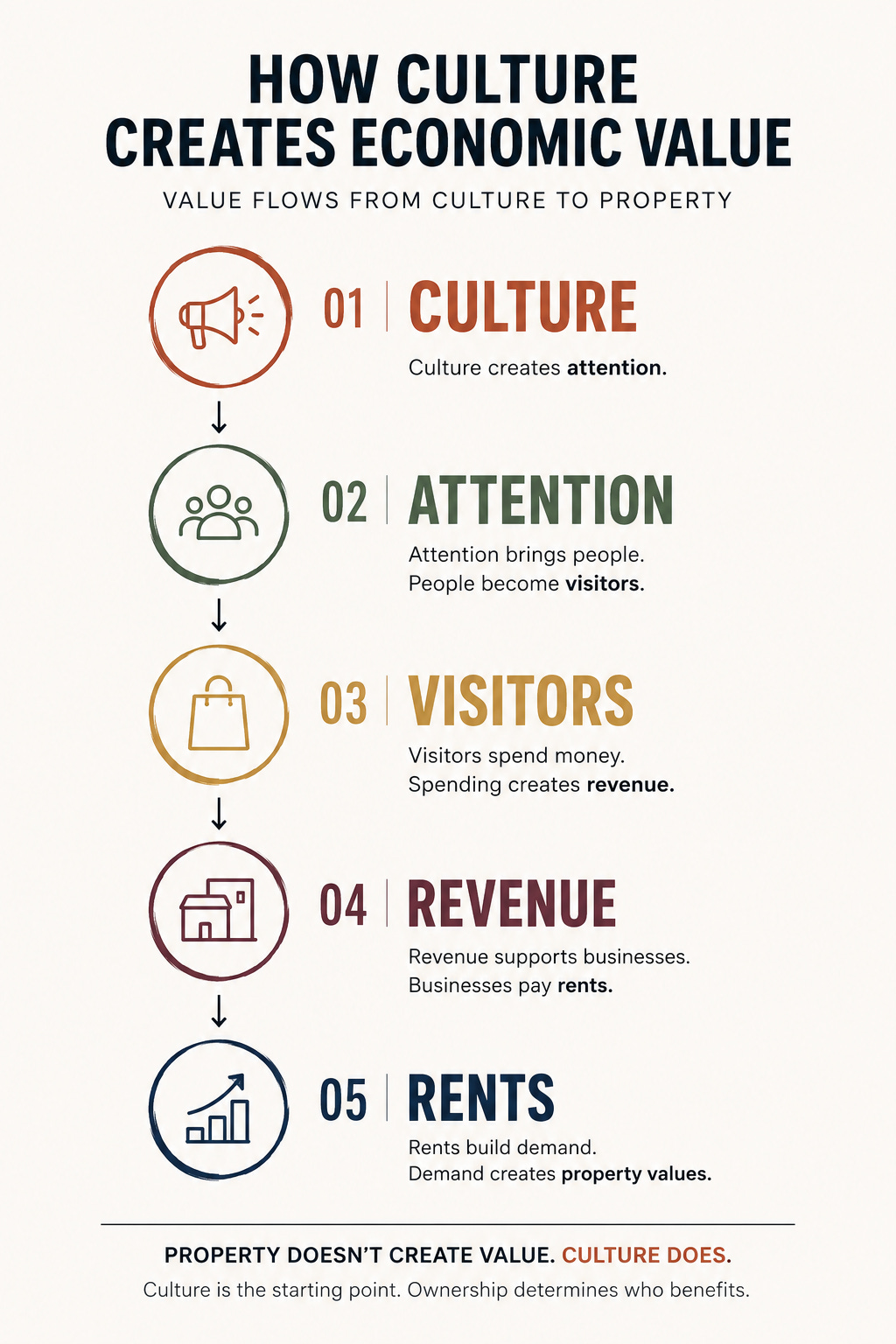
That's why Brixton is worth more than a similar collection of buildings one stop up the Victoria line.
The premium isn’t in the bricks.
It’s in everything the community has built around them.
Property doesn’t create cultural value. Culture creates property value.
Every culture begins as something intrinsic. Music. Food. Language. Traditions. Ways of living that hold value for the people who create them.
Then something changes.
Other people begin to copy them.
Visit them.
Market them.
Build businesses around them.
At that moment, culture stops being just identity. It becomes an economic asset—something that can be rented, branded, licensed and sold.
I use "cultural capital" here to mean the accumulated cultural value of a place and the economic value it generates.
This is why investors are drawn to places like Brixton. They're not buying bricks. They're buying the future income that culture makes possible.
Culture is a productive asset.
It generates economic value.
Ownership determines who captures that value.
For decades, Brixton's community created extraordinary value. Yet much of the financial return flowed to whoever owned the buildings. Buying back Brixton Village is our attempt to realign those incentives. Not because ownership is symbolic, but because ownership also determines where value flows.